
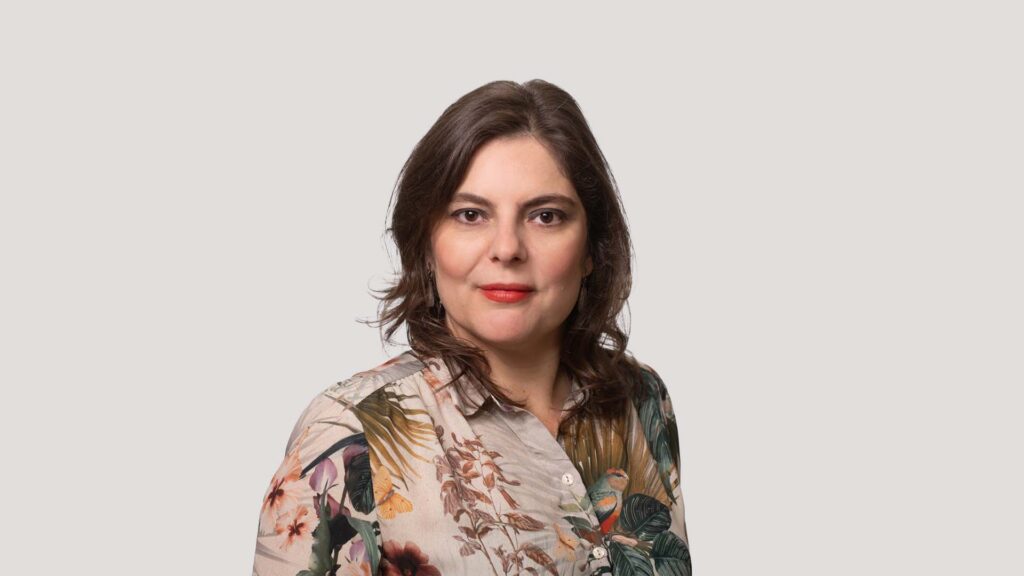
Paula Moura grew up riding horses and investigating bugs in an agricultural town in Brazil so small it did not even have a local newspaper. Moura often filled the void, taking on writing as a way to connect to her community. That passion for journalism eventually led her to São Paulo, the country’s densest city, where just taking the elevator up and down the towering buildings would make her dizzy.
Since then, Moura’s reporting career has continued to expand the boundaries of her world. She has reported from the Brazilian Amazon rainforest for National Geographic, The New York Times, and ProPublica. And she worked as a field producer for the Peabody and Emmy-award-winning documentary “The Territory,” among other projects. Moura’s stories feel both specific and universal. They highlight the unseen everyday conflicts over nature, rights, and land — and they reveal how those dynamics influence the way science is communicated across cultures.
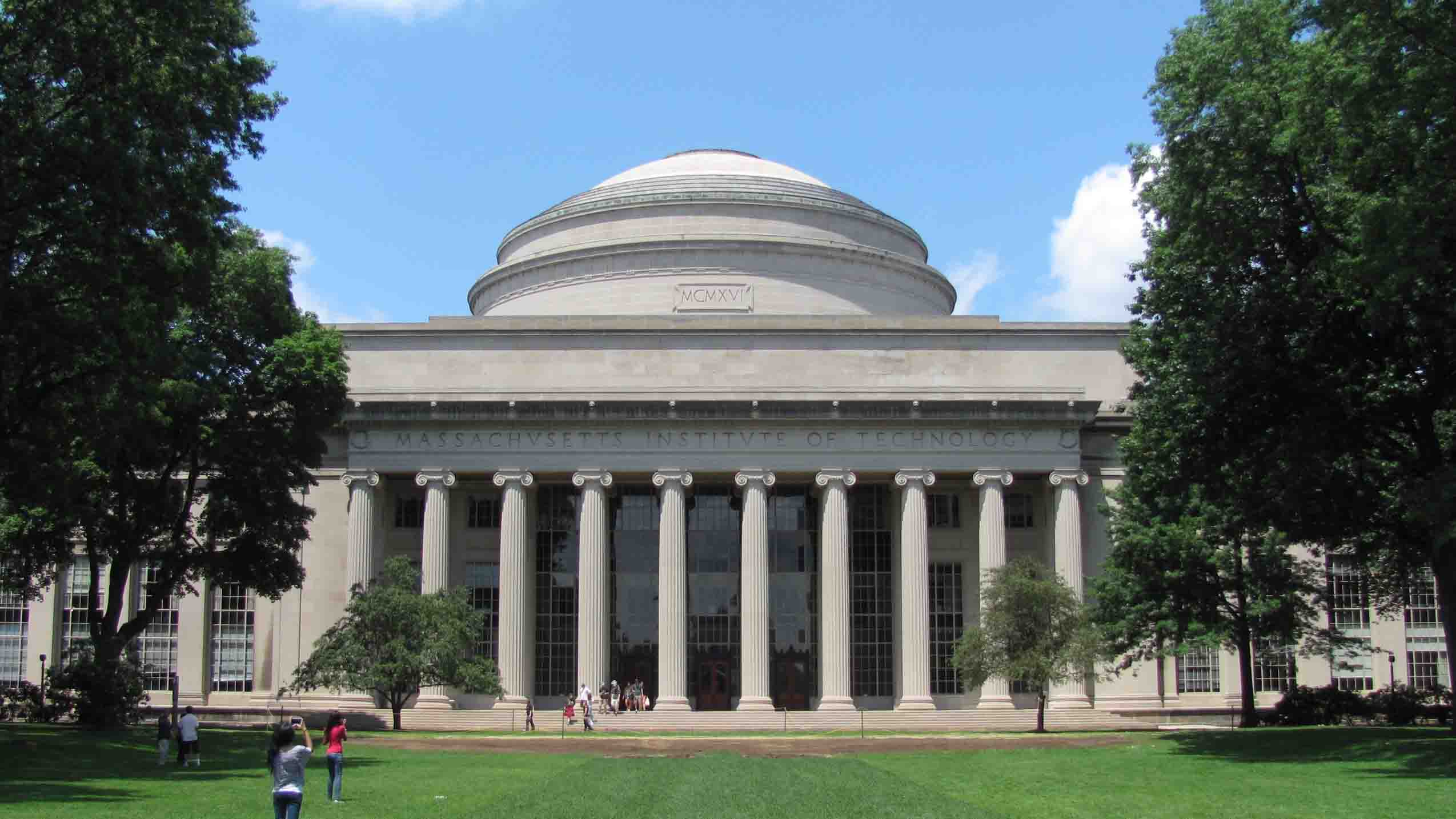
Moura, who is now spending a year as a Knight Science Journalism Fellow at MIT, sat down with me to discuss her approach to science journalism, the challenges of cross-cultural reporting, and the need for innovative ways to report on climate and environment. This interview was conducted in Portuguese and edited for length and clarity.
Julia Vaz: The work of journalists is often compared to the task of translation. As someone who has worked across different languages and cultures, is that how you think of your work?
Paula Moura: Yes, I think so. But it also goes beyond translation. I think journalists are responsible for digestion. They should be able to chew on dense information and present it in a more easily digestible form to readers, especially when talking about science journalism. After working for a long time, it’s expected that the scientific jargon would become more natural for a science journalist. But science journalists need to approach that information through the eyes of readers that are encountering it for the first time. Being able to do that is like translation in the sense that it’s a craft, something that you need to be always practicing.
I also think that it’s important for science journalists to go beyond translation and provide context, and to present information in a way that is relevant for people’s daily lives instead of just repeating what the scientists are saying. I think explaining is the essential part — and explaining why something is important.

JV: You have covered climate and environment extensively. What shapes your approach to reporting on that topic?
I think we can have great investigations, but we also need to present solutions. That’s something I always try to add to my work. It’s easy for people to forget they have agency. I think it’s so important for science journalism, especially related to climate and environment, to highlight that. What are people doing to solve this? What are other people doing to solve this? There is not a single solution.
JV: You have been a part of international reporting teams covering environmental topics in Brazil. How did you understand your role in those teams and how do you approach creating stories that can bridge cultures?
PM: I think it’s very challenging but there is a greater opening now for journalism in the U.S.A. that speaks of different cultures and that sees those cultures as sources of knowledge. I benefit from the foreign journalists before me that fought to bring their perspectives to this country so that we can value our own cultures and highlight perspectives that are not Eurocentric.
In those reporting experiences, I’ve been that person that could bring context. I’ve always felt very proud to represent my country in these international teams and to bring everything that I’ve learned about Brazil and bring [a] critical lens.
At the same time, I feel like I play special role, now living in the U.S.A. I have access to bigger platforms, where it can be interesting to bring the Brazilian perspective to topics of conservation and climate. I’d really like to continue being a bridge of communication between the two countries because I believe that can be fruitful.
I think we can have great investigations, but we also need to present solutions. That’s something I always try to add to my work.
JV: Many of your projects have also been multimedia. What do you think can be achieved through video or audio that can’t be fully captured in writing?
PM: I always thought it was a cool way to engage an audience in a way that text can’t. Different people react differently to different mediums. I like radio more than video, but I think video is the most engaging one and also where you can be the most creative.
As a journalist, you are always playing catch up with the audience. That’s extremely necessary. So my experience was a mix of professional necessity but also genuine personal interest.
Julia Vaz is a student in MIT’s Graduate Program in Science Writing. She has covered environment and climate change for Heatmap News, Inside Climate News, and New Hampshire Public Radio.
You must be logged in to post a comment.