
The forgotten history of a DIY Romanian internet. The secrets of how Big Tech captured America’s K-12 schools. The subtle pleasures of stargazing. Former Knight Science Journalism Fellows have been diving into these and other fascinating stories in recent months, by way of podcasts, magazines, books, and more. Here’s what our alumni have been up to — and what they have in store for the months ahead:
Fellows to Follow
Bucharest-based science and technology journalist Andrada Fiscutean (’20) has long been a master of the written word. Now she’s produced her first audio documentary, “The Teenagers Who Wired Romania,” for BBC World Service’s The Documentary Podcast.
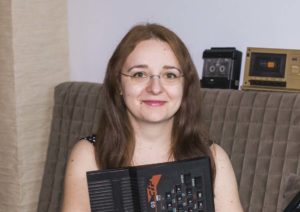
The documentary chronicles a generation of teenagers and young people who couldn’t afford the internet, and decided to climb rooftops, string cables between apartment blocks, and build their own DIY neighborhood networks, laying the foundations for Romania’s fast and affordable internet.
“I’ve wanted to tell this story for many, many years,” said Fiscutean, who added that she drew inspiration from the audio storytelling of fellow KSJ alum Molly Segal (’20) and from classes on technology and society that she took during her fellowship year.
Fiscutean worked with producer Tom Bonnett to tell the story from one rooftop to another, climbing 15-story apartment blocks with the people who built this infrastructure. She described it as “a story about what happens when people refuse to wait for the future to come to them. Instead, they roll up their sleeves and decide to build it themselves.”
For the past several months, U.K.-based journalist Ibby Caputo (’15) has served as senior producer and presenter of “ProHuman: Governing the Global AI Revolution,” a podcast that aims to help clarify what’s at stake for humanity in the AI race. Presented by Foreign Policy in collaboration with the Future of Life Institute, the podcast explores the AI-related risks humans face as a species, and how people can ensure AI is deployed safely and used responsibly. Featured guests include “godfather of AI” Yoshua Bengio and leading AI expert Stuart Russell.
“Everyone should listen to this, because of what’s at stake for humanity,” said Caputo, who added that her work on the podcast — as with her many other projects — was informed by her time as a Knight Science Journalism fellow.
The final episode of the six-part podcast series was released on Wednesday, August 12th. The podcast can be heard at the Foreign Policy website and other podcast streaming platforms.
Awards and Honors
In June, Evan Urquhart (’25), founding editor of Assigned Media, was awarded the Sarah Pettit Memorial Award for the LGBTQ+ Journalist of the Year, by the Association of LGBTQ+ Journalists.
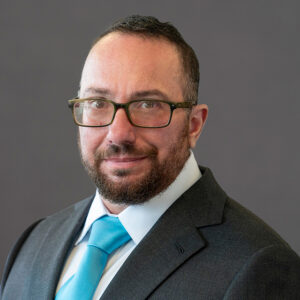
“It means the world to me and the team at Assigned Media for our work to have been recognized by the Association of LGBTQ+ Journalists,” Urquhart said.
“When I report on topics like the tensions between advocates for trans youth and Fenway Health, who ended transition care for youth due to fears of federal funding loss, my goal is always to bring the highest standards of science reporting to an audience whose needs aren’t usually top of mind at general audience news orgs. We don’t do it for awards, but it sure feels incredible to have our efforts seen by our journalist peers.”
Chicago-based freelancer Tasmiha Khan (’22) was named a recipient of one of 12 investigative journalism grants awarded this July by the Data-Driven Reporting Project, run by Northwestern University’s Medill School of Journalism. The project gives journalists between $25,000 and $40,000, plus technical training and editing support, to produce accountability journalism that serves local communities. Khan’s project will focus on caregiving and matrescence.
Khan was the only independent journalist selected to a cohort that included newsrooms such as Honolulu Civil Beat, The Florida Trib, and Planet Detroit.
Freelance journalist and writer Yves Sciama (‘14) was named the 2026 French Science Journalist of the Year by the French Association of Science Journalists.
The 1000-euro award is given out each year to one science journalist and is the only French award that specifically honors science journalism. The award recognized three of Sciama’s recent works, including a graphic story in which Sciama profiled solar geoengineering researcher David Keith, whom he met during his fellowship year at MIT.
Washington, D.C.-based independent journalist Melanie Kaplan (‘22) was awarded the American Society of Journalists and Authors’ 2026 Book Prize in the General Nonfiction category, for her book “Lab Dog.” Judges lauded Kaplan’s debut book for its “compelling and thorough investigation of the use of dogs in biomedical research.” They added that Kaplan “expertly blends personal experience with in-depth reporting to bring us a comprehensive view of the use of animals in lab research.”
This summer, Kaplan also published a feature article, “Of Ice and Heart,” about her adventures with an intrepid group of cold-water dippers in Maine. “I’d been hearing more and more about cold-water dipping and was happy to leave that to others,” she said. “But when I heard about this group of women — the community, the laughs, the bonding — I knew I wanted to join them.” The story appears in the Summer 2026 issue of National Parks magazine.
New on the Bookshelf
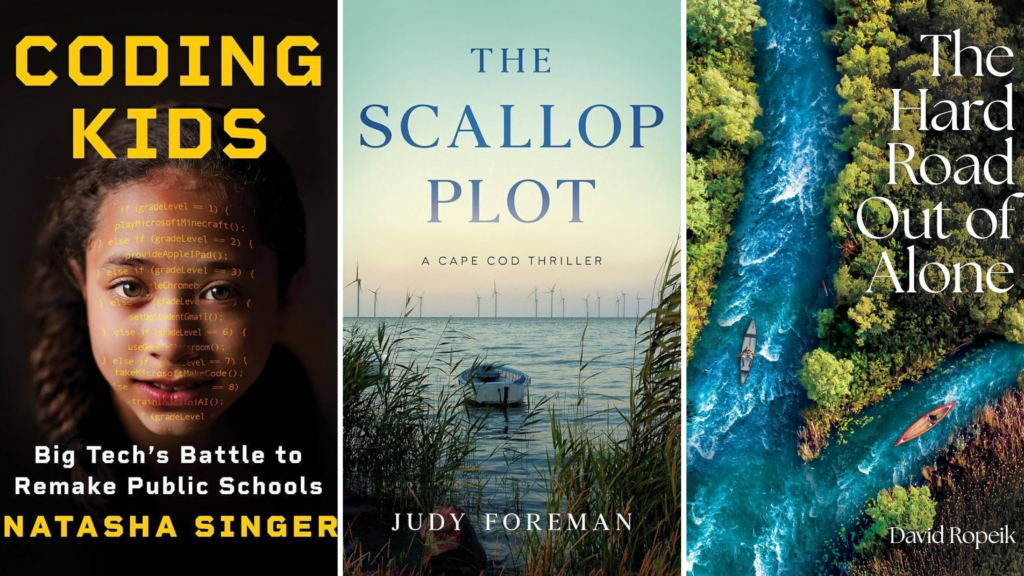
New York Times reporter Natasha Singer (’22) is anticipating the release of her new book, “CODING KIDS: Big Tech’s Battle to Remake Public Schools,” which will hit bookshelves September 8. The book documents how tech giants like Google and Microsoft catalyzed, co-opted, and ultimately came to capture computer science and AI education in K-12 schools. Singer started reporting the book when she was a KSJ Project Fellow five years ago.
“I’m so grateful to the KSJ program for providing support in the early stages of this project,” she said. Singer’s book, published by W.W. Norton, has received glowing early reviews from the likes of Ruha Benjamin, Sherry Turkle, Danah Boyd, and Publishers Weekly.
Meanwhile, two former fellows are flexing their fiction-writing skills.
Former Boston Globe health columnist Judy Foreman (’90) published her latest thriller this month, “The Scallop Plot.” Set in Provincetown, Massachusetts, it pits a feisty scallop fisherwoman and a female reporter against a sleazy windfarm developer and a group of well-funded, right-wing climate deniers.
In July, David Ropeik (‘95) — a recently retired Harvard professor who previously authored three non-fiction books — self-published his first novel, “The Hard Road Out of Being Alone.” It tells the story of a former investigative reporter who struggles with bitterness and disappointment until an unexpected encounter leads him to a new life.
Bylines Around the World
The following compendium includes a selection of recent alumni stories curated by Federico Kukso (‘16):
Fabiana Cambricoli (‘25): “From unpublished tablets to genetic editing: what we see in the treatment of high cholesterol,” Estadão (in Portuguese).
Sharon Muzaki (’25): “I came to document conservation. I found organised crime,” and “What bats in Uganda are still telling us,” Nature Africa; “Ebola outbreak draws attention to longstanding virus spillover risks in western Uganda,” Mongabay.
Anil Oza (‘25): “White House offers its science blueprint: More AI, less life sciences,” STAT.
Kai Kupferschmidt (‘24): “‘Mismatched’ vaccine being rolled out against Ebola outbreak,” Science.
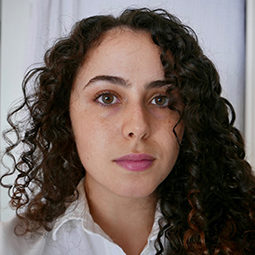
Jessica Hamzelou (‘23): “Cloning could be used to save species—or make human ‘organ sacks,’” MIT Technology Review.
Isabella Cueto (‘22): “FDA to require notice of additives in food supply for the first time,” STAT.
Richard Fisher (‘20):“Stargazing really is good for the soul,” Psyche.
Eva Wolfangel (‘20): “Health data, passwords, customer data – it’s all lying around in plain sight,” Die Zeit (in German).
Tim De Chant (‘19): “Every fusion startup that has raised over $100M,” TechCrunch.
Iván Carrillo (‘17): “From scarcity to abundance: the sea as a source of prosperity,” El Universal (with Aminetth Sánchez).
Courtney Humphries (‘16): “Glancing out my yurt window at rain-soaked tents, I wondered: Was I actually camping?” Boston Globe.
Dan Falk (‘12):“Time Brings Order to the Universe,” Nautilus.
Konstantin Kakaes (‘10): “Why the Legendary Erdős Problems Are Falling to AI,” Quanta Magazine.
Sascha Karberg (‘09):“A rare glimpse into a high-security laboratory: Here, cells are created that are intended to defeat cancer,” Der Tagesspiegel (with Alexander Schlichter).
Valeria Román (‘05): “How many active volcanoes are there in Latin America, and why is protection for the population still inadequate?” Infobae (in Spanish).
Steve Nadis (’98): “Mathematics is out there,” Aeon.
You must be logged in to post a comment.