
 "
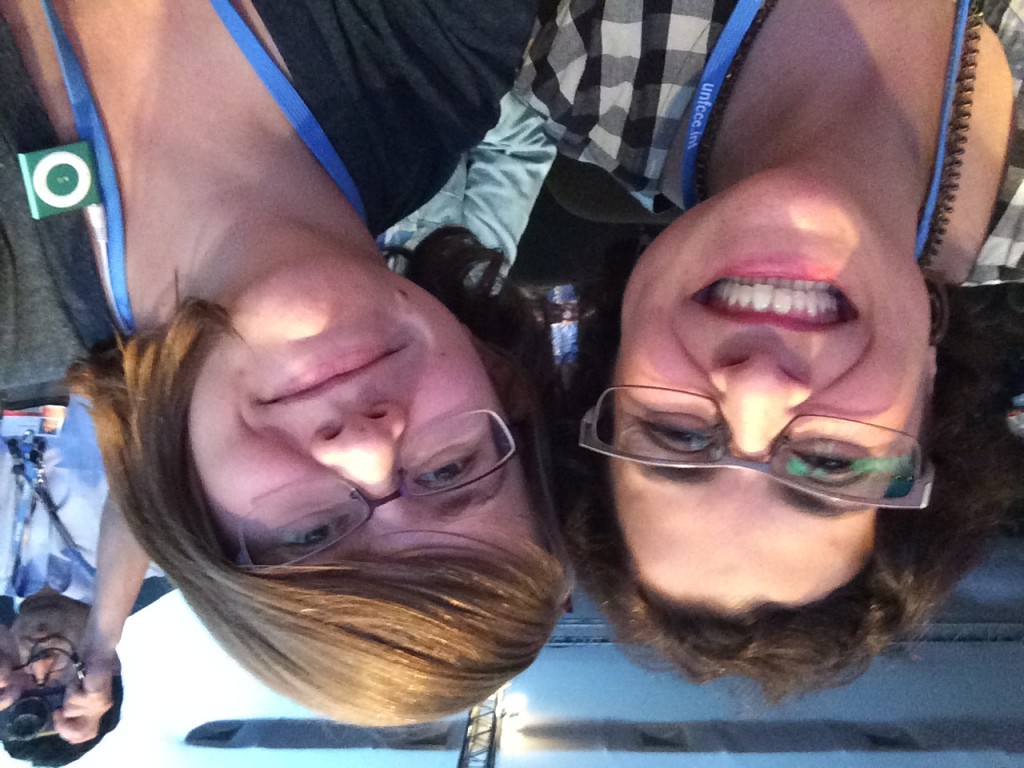
"In the beginning of this Fellowship, we were invited to make a brief presentation about ourselves, our careers, and what we expected from the program. After a few years reportingon environmental issues, I reached an inevitable conclusion that I shared with my fellow Fellows: climate change is the biggest problem faced by mankind—now and in the future. I came to the Knight Science Journalism program planning to spend at least part of the academic year trying to figure out why—despite all the scientific studies and reports showing the dangerous path mankind is taking—governments haven’t been able, so far, to reach an effective agreement to avoid it. I guess it was naïve to think that just because we know something, we need to do something. Turns out the world is a bit more complicated than that…
 "
"KSJ Fellowship Application Guidelines Updated for 2015-16
If you’re a full-time journalist focused on science, technology, health, or the environment and you’re looking for an opportunity to reenergize at one of the world’s top R&D institutions, it’s not too early to think about applying for a 9-month fellowship at Knight Science Journalism at MIT in the 2015-16 academic year.
Starting today, you can read about how the Fellowship program works, and how you can apply, at our newly updated application guidelines section. (See our new 9-Month Fellowship description, our Eligibility page, our How to Apply section, and our FAQ page.]
Here’s what isn’t changing about our program. It is still, and will always be, a unique opportunity for science and technology writers with at least three to five years of full-time journalism experience to
- step back from their daily work
- deepen their understanding of cutting-edge areas of science and engineering
- take courses at MIT and Harvard
- interact with top researchers featured as part of the KSJ’s seminars, workshops, and field trips
- learn from colleagues
- grow …
 "
"Pulitzer Prize-winner to head Knight Science Journalism at MIT
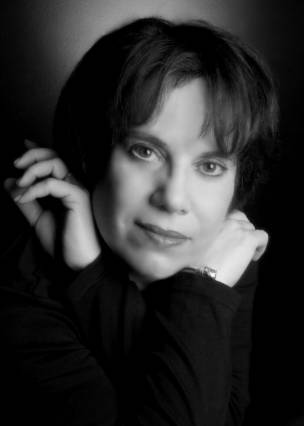
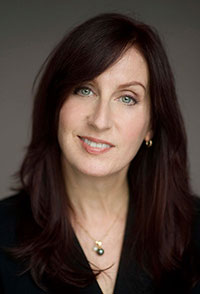
Deborah K. Fitzgerald, the Kenan Sahin Dean of MIT’s School of Humanities, Arts, and Social Sciences (SHASS), has announced that Pulitzer Prize-winning journalist Deborah Blum will join MIT in 2015 as the director of Knight Science Journalism at MIT, a fellowship program that enables world-class journalists to spend a year at MIT studying everything from science, technology, and engineering to history of science, literature, policy, and political science.
 "
"2014-15 Project Fellow Selected
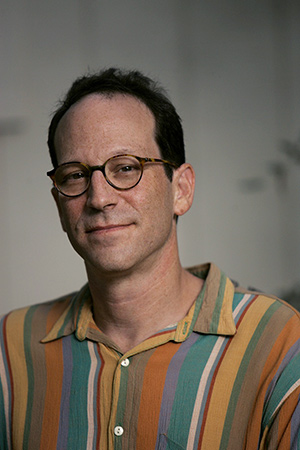
Scott Huler, the Knight Project Fellow for 2014-2015, will take a modern walking expedition through the Carolinas, following in the footsteps of an explorer who made the trek in 1700, one of the earliest of the Lewis and Clark-type of scientific explorations in America.
Scott writes:
In 1700, explorer John Lawson left “Charles-Town,” the only settlement of any size in the Carolina colony, for a walk into the backcountry. First settled by Europeans in 1670, Carolina beyond its coast remained in 1700 mostly unknown, and its owners charged Lawson with figuring out what was out there. Over the next months Lawson, with native guides, made his way through the colony, mostly on foot. He kept a journal and produced a natural history of the colony; descriptions of the new territory’s plants, animals, birds, and crops; and a thorough account of the natives, including dictionaries. Lawson did, that is, what Lewis and Clark did for the Louisiana Territory a century later. Lawson’s resulting 1709 book – “A New Voyage to Carolina” — was a bestseller, and his observations formed the foundation of understanding of the Carolinas. With the cooperation of modern scientists and historians, I plan to retrace his journey to …
 "
"Announcing 2014–2015 Knight Fellows
Knight Science Journalism at MIT has selected twelve journalists working in six countries for its 32nd class of Fellows. The journalists will study science, health, environment and technology at MIT during the academic year 2014-15.
Rachael Buchanan is the Medical Producer for BBC News. She has been a science & health journalist for the BBC for 14 years, producing pieces about science and medicine for TV, radio and online.
Ibby Caputo reports on the health of people and communities in and around the Greater Boston area for WGBH Radio and TV. Her work has aired nationally on PRI’s The World, NPR News, All Things Considered, and internationally on the BBC’s Boston Calling. Her journalism, essays and photography have been published in The Washington Post, The Chicago Tribune, Cape Cod Times, The Times-Picayune, Women & Cancer magazine and elsewhere.
Ian Cheney is an Emmy-nominated and Peabody Award-winning documentary filmmaker. His films and collaborations include King Corn (2007), The Greening of Southie (2008), Truck Farm (2010), The City Dark (2011), The Melungeons (2013) and The Search for General Tso (2014).
Zheng Cui is a journalist working with Caixin Media, a leading media group in China, specializing in environment and science reporting. She is based in Beijing, China.
Olga Dobrovidova is a news reporter and producer based in Moscow, Russia. She spent four years working at the Science and Environment desk with the country’s leading newswire service, RIA Novosti, and is also a columnist for Responding to Climate Change (UK), where she writes about Russian climate change policy and practice.
Oriana Fernandez is journalist since 2002. She is a reporter of La Tercera newspaper, and also worked in La Segunda and El Mostrador.cl. Oriana covers issues like the impact of Climate Change, the effects of pollution in communities and problems with public and private heath in Chile.
Gideon Gil is health and science editor of The Boston Globe, where he has directed print and online coverage of health care, science, and the environment for 10 years. His reporters have won one Pulitzer Prize, for coverage of stem cells, and twice been named finalists. He previously was a medical reporter and editor at the Louisville Courier-Journal, where he was part of a team awarded a Pulitzer for investigating the causes of a fatal bus crash that took 27 lives. He is a board member of the Association of Health Care Journalists and chairs its membership committee and Boston chapter.
Giovana Girardi is a science and environmental reporter from O Estado de S. Paulo, one of the biggest newspapers in Brazil. She has been working on these issues for about 13 years. More recently, she has been focusing on climate change research, on the diplomatic negotiations surrounding a new global agreement to curb greenhouse gas emissions, on biodiversity and humans interactions with it, and and also writing about environmental issues in cities. In the last few years she reported from summits like Rio+20 and Conferences of the Parties of UN Framework Convention on Climate Change. And has also followed scientists in their field studies in places like Amazon Forest, Atlantic Forest and other brazilian biomes.
Matt Kaplan is a science correspondent with The Economist in London. Over the years he has also contributed to Nature, Science, New Scientist, Scientific American, National Geographic, and the New York Times. He is the author of The Science of Monsters.
Kathleen McLaughlin is a journalist based in Beijing, China, who writes for The Economist, the Guardian and numerous other media outlets. She has reported across Asia and East Africa on science and medical issues, including the legacy of China’s plasma industry and resulting AIDS epidemic, China’s influence on health care in Africa and counterfeit malaria drugs and the spread of drug-resistant malaria in Asia and Africa.
George Musser is a contributing editor at Scientific American magazine in New York. He was the magazine’s senior editor for space science from 1998 to 2012, when he left the full-time staff to focus on book-writing. He received the 2011 Science Writing Award from the American Institute of Physics in 2011 and Jonathan Eberhart Planetary Sciences Journalism Award from the American Astronomical Society in 2010. His first book, The Complete Idiot’s Guide to String Theory, was published by Alpha in 2008.
Bob Young is a staff reporter at The Seattle Times, where he covers marijuana as Washington state creates history by legalizing production and sale of the drug. He has also reported on politics and urban affairs in his 12 years at the paper and been a staff writer for the Times’ Sunday magazine.
The new Knights were chosen by a committee composed of Philip J. Hilts, director, Knight Science Journalism at MIT; Charles Petit, science writer and KSJ Tracker; Cynthia Graber, freelance journalist; Amanda Gefter, writer and consultant at New Scientist magazine; and John Durant, director of the MIT Museum.
 "
"2013-14 Project Fellow
The Knight Science Journalism Program at MIT has selected Maryn McKenna as its 2013-2014 Journalism Project Fellow. She will carry out research on food science and food production and will produce a book-length text and a series of multimedia stories from the research.
She is a journalist and author who writes about public health, global health, medicine, and food policy. She has reported from a field hospital in New Orleans during Hurricane Katrina, a village on Thailand’s west coast that was erased by the Indian Ocean tsunami, a CDC team investigating the anthrax- letter attacks on Capitol Hill, a graveyard within the Arctic Circle that held victims of the 1918 flu, a malaria hospital in Malawi, an isolation ward for multi-drug resistant TB in Vietnam and a polio-eradication team in India. She is the author of SUPERBUG: The Fatal Menace of MRSA (Free Press/Simon & Schuster, 2010), an investigation of the global epidemic of drug-resistant staph, which received the 2013 June Roth Memorial Book Award and the 2011 Science in Society Award; and BEATING BACK THE DEVIL: On the Front Lines with the Disease Detectives of the Epidemic Intelligence Service (FP/S&S, 2004), which recounts a year she spent embedded with the CDC’s rapid- reaction force and which was named a Top Science Book by Amazon and an Outstanding Academic Title by the American Library Association. She is a columnist for Scientific American and blogs for Wired. She is a Senior Fellow of the Schuster Institute for Investigative Journalism at Brandeis University.