“It’s worse than Covid.” Those weren’t words I expected to hear about the current climate for science writing, especially not from an emergency room physician. The comment came from Jeremy Faust, MD, who in addition to being a physician is the editor-in-chief of MedPage Today and the author of the popular Substack newsletter “Inside Medicine,” where he writes about the toll current policies are taking on science, research, and public health.
Faust was speaking at an event KSJ convened earlier this month called “Covering Crisis: Science Reporting in an Age of Turmoil, Fear, and Data Erasure,” held to discuss the extreme and difficult environment science writers are navigating as they struggle to cover the rush of news coming out of the new administration and personally process the devastating effects some new policies and cuts are having.
“It’s draining. It’s incredibly sad … We know people are dying right now,” Sara Reardon, a current KSJ fellow who covered the administration for Science, said at the event about cuts to U.S. AID and HIV programs in Africa.

Reardon was among speakers, including former KSJ fellow Anil Oza of STAT and Katherine J. Wu of the Atlantic, who said the cognitive load of working as they saw institutions and programs they had covered dismantled was dispiriting, and more onerous than Covid, because conversations today are far more divisive and politicized. Many also said the work load had been relentless.
“Until recently, I had been working all the time,” Boston Globe Health and Science Editor and former KSJ fellow Anna Kuchment said. “If I wasn’t editing a story, I was reading. I was obsessed with what we were covering and not covering.”
We raced to pull this event together because I thought it was important for our community to gather and discuss this singular moment in time, when research and science are under attack and covering science is extremely politicized and demanding in new and complex ways. I’d asked six people to speak, thinking only half of them would be available on short notice. But everyone said yes, indicating this was a conversation that people wanted, and maybe even needed, to have.
It is clear to me from this conversation that the passion to keep doing the work of science journalism remains strong. No one is backing down, despite challenges like the opacity of federal agencies and more sources insisting on remaining anonymous.
It is also clear to me that science reporters have to take care of themselves and their mental health, take breaks, and sometimes tune out the news. Because this work is not letting up and the impact that funding and personnel cuts are having on science and public health must continue to be covered rigorously.

Another important event we held this month — the Victor K. McElheny Award ceremony — left me feeling extremely optimistic. This award, to honor outstanding local or regional science reporting, was given this year to Pittsburgh-based PublicSource, which produced a powerful investigative series on the effect fracking operations have had on families in rural West Virginia.
It was fascinating to hear lead reporter and photojournalist Quinn Glabicki describe how he found the story, gained the trust of the families involved over time, and reported the project — even sleeping on one family’s couch one night so he could join an early morning deer hunting trip. Hearing from PublicSource Editor-in-Chief Halle Stockton, who is using innovative methods, like focusing on empathy and teaming with local influencers to tell stories on social media, was truly inspiring.
We very much missed the presence of Victor and Ruth McElheny in the audience at his namesake event. I continue to think of him daily as I begin to lead the program he founded more than four decades ago.

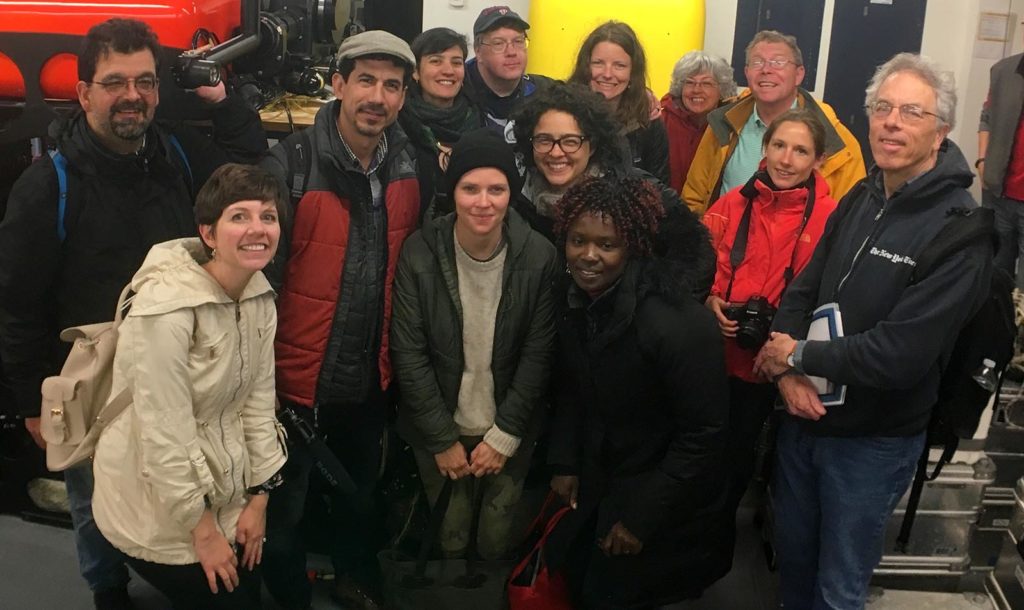
As Victor would wish, the fellowship year is off and running, and as busy as ever with seminars, field trips, and a new Friday luncheon series for fellows we started to discuss the craft and practice of journalism. We just returned from our annual trip to Woods Hole, where we had a timely discussion about communicating science in crisis from Woods Hole Oceanographic Institute scientist Chris Reddy, and saw a breathtakingly beautiful presentation on research into butterfly wing evolution and genetics from Marine Biological Laboratory director Nipam Patel — who showed us just a fraction of the remarkable butterfly collection he has been building since age eight.
This year’s fellowship class is extraordinary, and off to a great start. They are not to be messed with: The class includes a former professional fencer, a Black Belt in karate, someone who tracks ocelots, and someone who once ate an entire bird. I can’t wait to see what they’ll do during their year at MIT.
I’m thrilled to be taking the reins from the incredible Deb Blum to build on her work, and that of associate director Ashley Smart, to help steer KSJ into the future — as challenging as that future may be.
UPDATE: A previous version of this piece gave an incorrect affiliation for Jeremy Faust. He is editor-in-chief of MedPage Today.

"
"
"


You must be logged in to post a comment.