
 "
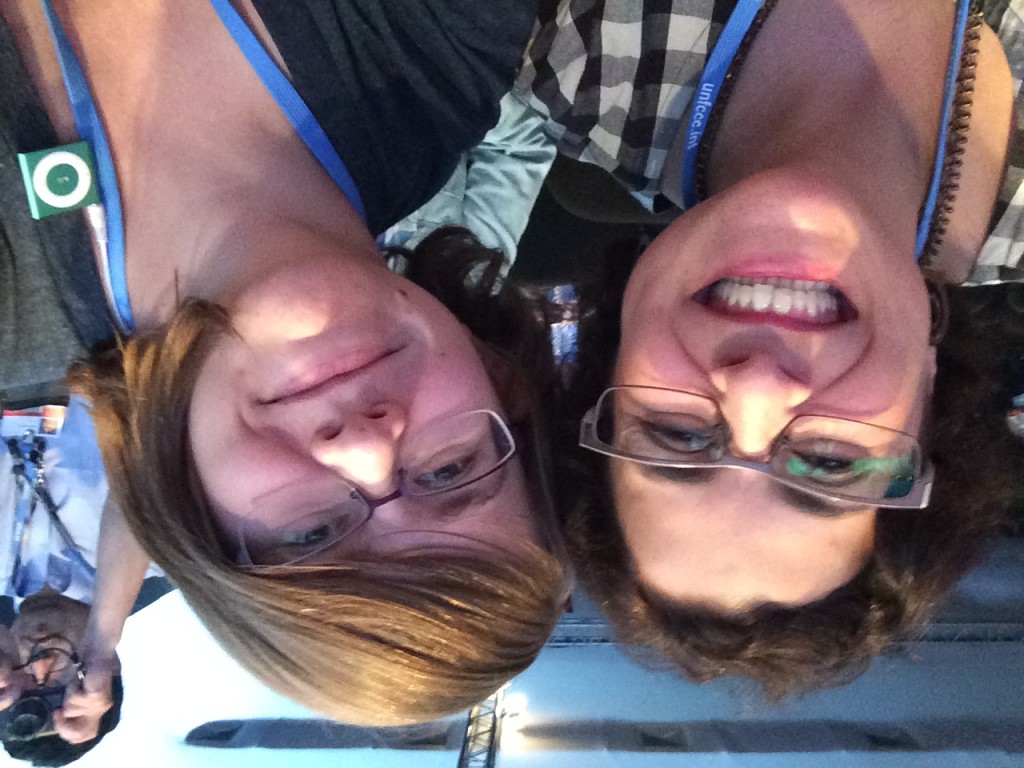
In the beginning of this Fellowship, we were invited to make a brief presentation about ourselves, our careers, and what we expected from the program. After a few years reportingon environmental issues, I reached an inevitable conclusion that I shared with my fellow Fellows: climate change is the biggest problem faced by mankind—now and in the future. I came to the Knight Science Journalism program planning to spend at least part of the academic year trying to figure out why—despite all the scientific studies and reports showing the dangerous path mankind is taking—governments haven’t been able, so far, to reach an effective agreement to avoid it. I guess it was naïve to think that just because we know something, we need to do something. Turns out the world is a bit more complicated than that…
 "
The Lawson Trek: Regarding Journalism a Lot and Lawson Only a Little
Editor’s note: For The Lawson Trek, journalist Scott Huler is retracing the journey of discovery undertaken by canoe and on foot in 1700-1701 by John Lawson, the first observer to carefully describe and catalogue the flora, fauna, geography and inhabitants of the Carolinas. Posts from Scott’s trek are appearing at the Scientific American Expeditions blog, Scott’s own Lawson Trek blog, and here at the KSJ blog. For all the posts in the series, click here.
One of my undertakings on the Lawson Trek as a Knight Science Journalism Fellow at MIT is to think about more than just about Lawson and the scientific and cultural observations he made. I’m also trying out current journalistic tools and seeing how they compare to Lawson’s. I’m a science journalism fellow, not just a science fellow.
 "
The Lawson Trek: Paddling the Intracoastal Waterway
Editor’s note: For The Lawson Trek, journalist Scott Huler is retracing the journey of discovery undertaken by canoe and on foot in 1700-1701 by John Lawson, the first observer to carefully describe and catalogue the flora, fauna, geography and inhabitants of the Carolinas. Posts from Scott’s trek are appearing at the Scientific American Expeditions blog, Scott’s own Lawson Trek blog, and here at the KSJ blog. For all the posts in the series, click here.
We stopped for lunch during the first day of the Lawson Trek on an oyster shoal, an uncharacteristically hot October sun stinging my shoulders, but surprisingly unbothered by four hours of kayak paddling. We had crossed Charleston Harbor against the current — the tide was coming in, whereas we were heading offshore.
 "
KSJ Fellowship Application Guidelines Updated for 2015-16
If you’re a full-time journalist focused on science, technology, health, or the environment and you’re looking for an opportunity to reenergize at one of the world’s top R&D institutions, it’s not too early to think about applying for a 9-month fellowship at Knight Science Journalism at MIT in the 2015-16 academic year.
Starting today, you can read about how the Fellowship program works, and how you can apply, at our newly updated application guidelines section. (See our new 9-Month Fellowship description, our Eligibility page, our How to Apply section, and our FAQ page.]
Here’s what isn’t changing about our program. It is still, and will always be, a unique opportunity for science and technology writers with at least three to five years of full-time journalism experience to
- step back from their daily work
- deepen their understanding of cutting-edge areas of science and engineering
- take courses at MIT and Harvard
- interact with top researchers featured as part of the KSJ’s seminars, workshops, and field trips
- learn from colleagues
- grow …
 "
Of Stephen Hawking, Eddie Redmayne, and Quantum Entanglement
MIT physicist and historian David Kaiser, who heads KSJ’s home department (the Program in Science, Technology, and Society), is someone who appreciates the power of mass communication. Last week, essays by Kaiser turned up in both the Huffington Post and The New York Times
The first piece, “Of Black Holes and Glittering Stars: The Theory of Everything and Hollywood Physics”*, recounts Kaiser’s experiences at the recent Washington, D.C., premiere of The Theory of Everything, the new film about the early career of cosmologist Stephen Hawking. At the event, sponsored by the American Physical Society, Kaiser talked with English actor Eddie Redmayne, who plays Hawking in the film, and even posed with him on the red carpet.
Kaiser says he liked the film for its sensitive portrayal of the relationship between Hawking and his wife Jane (played by Felicity Jones) across the tumultous years in the early 1960s when Hawking was beginning his forays into theoretical physics, even even as he began to battle amyotrophic lateral sclerosis, a degenerative motor neuron disease.
*New York Times …
 "

Dispelling the Gloom: An Open Letter to Science and Technology Journalists
If you’re a journalist and you spend too much time listening to magazine editors talking about falling advertising and subscription revenues, or checking Columbia Journalism Review or Romenesko for updates on the latest newsroom closures, it’s easy to get discouraged about your career choice.
But now is not the time to lose heart—and in this short post I’m going to tell you why. First, though, a word of congratulations. If you’re reading this blog, that probably means you chose science, health, environment, or technology reporting as your career. So: kudos to you. It’s a noble calling and one that will only get more and more critical to the health of democratic societies as the century progresses.
In fact, the Knight Science Journalism program exists specifically to help people like you. Each year we work to introduce our Fellows to people, ideas, and themes that will enrich their work after their Fellowship year. We push them to grow and become even better at what they do. We give them time and space to add to fund of knowledge, skills, and perspective they’ll need in order to serve their audiences in the tumultuous decades ahead …